
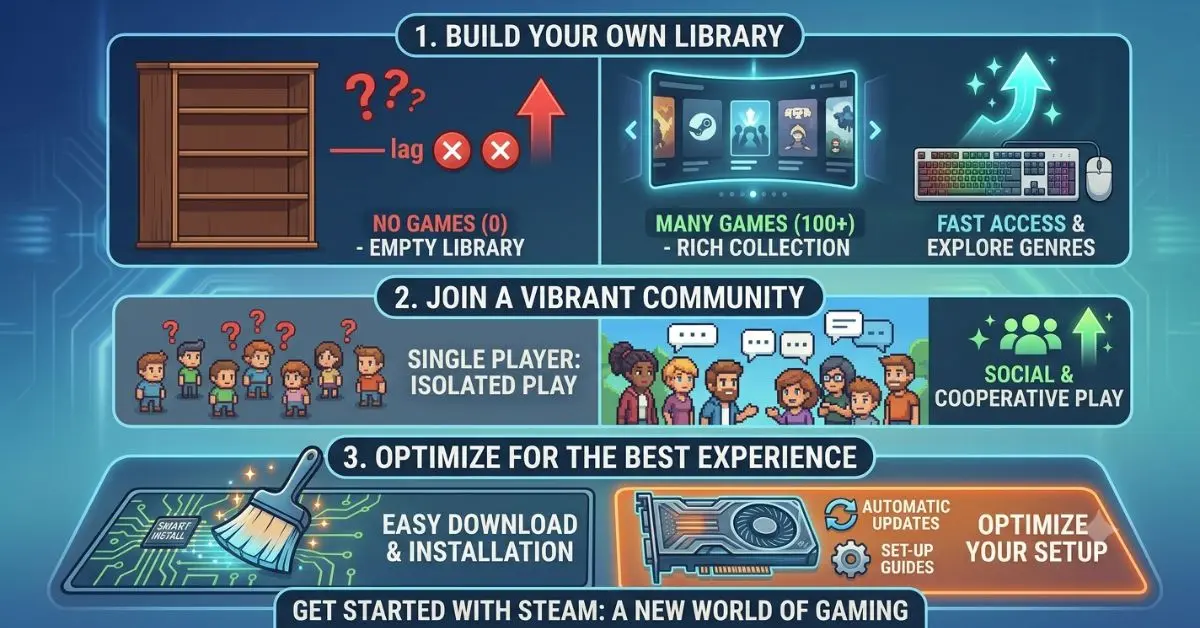
Introduction
If you’re new to PC gaming, you’ve probably heard about Steam but may not know exactly what it is or how to use it. This Beginner’s Guide to Steam for New Gamers is designed to help you understand the platform from the ground up. Whether you’re buying your first game, creating an account, or exploring the Steam Store, learning the basics will make your gaming experience much more enjoyable.
Steam is the world’s largest digital gaming platform, offering thousands of games across every genre imaginable. From action-packed adventures and multiplayer shooters to relaxing simulation games and indie masterpieces, there’s something for everyone. Besides purchasing games, Steam also lets you connect with friends, earn achievements, save your progress in the cloud, and participate in gaming communities.
Many new players feel overwhelmed by the number of features Steam offers. Fortunately, getting started is easier than it looks. With a little guidance, you’ll quickly learn how to navigate the platform, manage your game library, customize your profile, and take advantage of useful tools that improve your overall experience.
In this comprehensive Beginner’s Guide to Steam for New Gamers, you’ll learn everything from creating an account to purchasing games safely, understanding Steam’s features, and making the most of your gaming journey.
What is Beginner’s Guide to Steam for New Gamers?
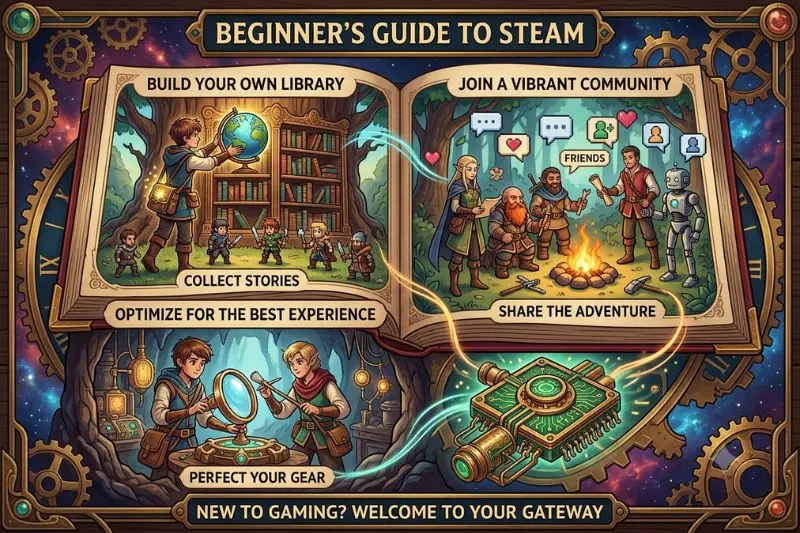
Steam is a digital game distribution platform developed by Valve that allows users to buy, download, install, and manage PC games in one convenient place. Instead of purchasing physical game discs, players can instantly access thousands of titles with just a few clicks.
For beginners, Steam serves as an all-in-one gaming hub. It provides access to free-to-play games, paid games, downloadable content (DLC), software, game updates, and community features. Once you purchase a game, it remains tied to your Steam account, making it easy to reinstall it whenever you want.
Steam also includes several built-in features that enhance the gaming experience, such as:
- Cloud saves
- Automatic game updates
- Friends list and messaging
- Multiplayer matchmaking
- Achievements
- User reviews
- Community discussions
- Screenshot sharing
- Game broadcasting
Whether you play casually or spend hours gaming each week, Steam makes organizing and enjoying your collection simple and convenient.
Why is Beginner’s Guide to Steam for New Gamers Important?
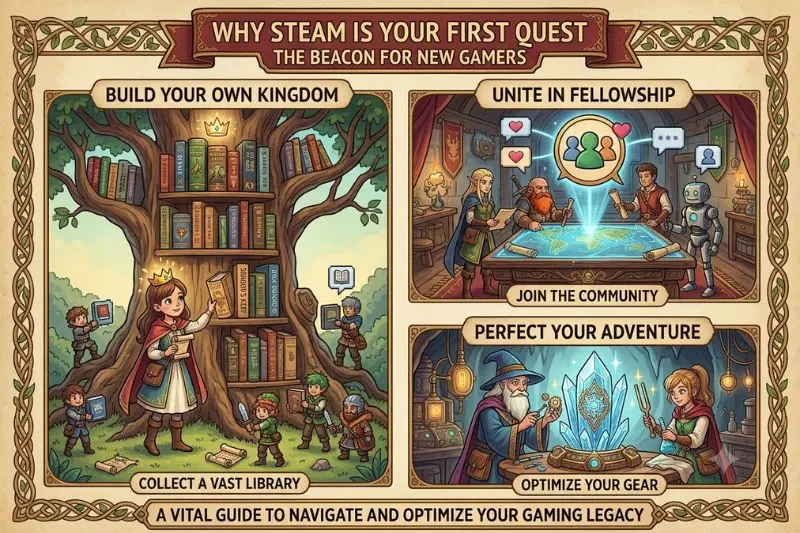
Understanding how Steam works can save you time, money, and frustration. Instead of randomly buying games or missing useful features, you’ll know how to navigate the platform efficiently.
Some key reasons why learning Steam is important include:
- Finding games that match your interests.
- Purchasing games safely through official listings.
- Taking advantage of seasonal sales and discounts.
- Managing your game library with ease.
- Connecting with friends for multiplayer gaming.
- Accessing automatic updates without manual downloads.
- Protecting your account with security features.
- Using cloud saves to continue playing across multiple devices.
By learning the basics early, you’ll enjoy a smoother introduction to PC gaming and avoid common beginner mistakes.
Detailed Step-by-Step Guide
Step 1: Create Your Steam Account
The first step is creating a free Steam account.
You’ll need:
- A valid email address
- A secure password
- An internet connection
After registering, verify your email address to activate your account. Consider enabling two-factor authentication through Steam Guard for additional security.
Step 2: Download and Install Steam
Once your account is ready, download the Steam client and install it on your computer.
The installation process only takes a few minutes. After launching Steam, sign in using your account credentials.
The desktop application gives you access to your library, store, downloads, friends, and account settings.
Step 3: Learn the Steam Interface
When you first open Steam, you’ll notice several main sections.
Store
Browse thousands of games by category, genre, popularity, price, or release date.
Library
Your purchased and installed games appear here.
Community
Read game discussions, guides, screenshots, artwork, and reviews from other players.
Friends & Chat
Add friends, send messages, and join multiplayer games together.
Taking time to explore these sections will make using Steam much easier.
Step 4: Customize Your Profile
Your Steam profile acts as your gaming identity.
You can personalize it by adding:
- A profile picture
- A username
- A short bio
- Favorite games
- Achievement showcases
- Screenshots
Although optional, customizing your profile helps friends recognize you and makes your account feel more personal.
Step 5: Add Friends
Gaming is often more enjoyable with friends.
Steam allows you to:
- Send friend requests
- Join multiplayer games
- Voice chat
- Text chat
- Share screenshots
- Compare achievements
Many online games become more entertaining when played together.
Step 6: Explore the Steam Store
Before purchasing your first game, spend some time browsing.
The Steam Store includes useful categories such as:
- New Releases
- Top Sellers
- Free to Play
- Strategy
- Adventure
- Simulation
- Sports
- Racing
- Horror
- Indie Games
You can also filter games by price, operating system, user reviews, multiplayer support, controller compatibility, and more.
Step 7: Read User Reviews Before Buying
One of Steam’s biggest strengths is its review system.
Before buying any game, check:
- Overall rating
- Recent reviews
- Playtime from reviewers
- Common complaints
- Performance feedback
For example, a game with “Very Positive” reviews and thousands of satisfied players is generally a safer purchase than one with mixed feedback.
Step 8: Purchase Your First Game
Buying a game on Steam is straightforward.
- Open the game’s store page.
- Click Add to Cart.
- Proceed to checkout.
- Choose your preferred payment method.
- Complete the purchase.
Once the transaction is successful, the game is permanently added to your Steam Library.
If you’re unsure about spending money right away, explore Steam’s extensive collection of free-to-play titles. Many popular games offer hundreds of hours of entertainment without requiring an upfront purchase.
Step 9: Download and Install Your Game
After purchasing a game, navigate to your Library.
Select the game and click Install. You’ll be prompted to choose an installation location if you have multiple storage drives.
Steam will automatically download the required files and install the game. Download times depend on your internet speed and the size of the game. Once the installation is complete, simply click Play to launch your first title.
Step 10: Organize Your Game Library
As your collection grows, keeping it organized becomes increasingly helpful.
Steam allows you to:
- Create custom collections for different genres.
- Mark favorite games for quick access.
- Hide games you rarely play.
- Use the search function to find titles instantly.
A well-organized library makes it much easier to manage dozens—or even hundreds—of games as your collection expands.
Step 11: Keep Your Games Updated
One of Steam’s biggest advantages is automatic game updates. Developers regularly release patches to fix bugs, improve performance, balance gameplay, and add new content.
To make the most of this feature:
- Enable automatic updates.
- Check download settings if updates seem slow.
- Restart Steam occasionally to ensure updates are applied correctly.
Keeping your games updated helps you enjoy the latest features while reducing compatibility issues.
Step 12: Use Steam Cloud Saves
Steam Cloud automatically stores your game progress online for supported titles.
Benefits include:
- Continue your progress after reinstalling Windows.
- Access saved games on another computer.
- Protect your progress if your hard drive fails.
Most modern games support this feature, making it an essential tool for every player.
Step 13: Discover Steam Sales
Steam is famous for offering huge discounts throughout the year.
Popular sale events include:
- Summer Sale
- Winter Sale
- Spring Sale
- Autumn Sale
- Publisher Weekends
- Daily and Weekly Deals
Adding games to your Wishlist allows Steam to notify you when prices drop, helping you save money on future purchases.
Step 14: Understand Refunds
Steam offers a customer-friendly refund policy for eligible purchases.
Generally, you can request a refund if:
- The purchase was made recently.
- You have played the game for only a limited amount of time.
- The request meets Steam’s refund requirements.
This policy gives beginners extra confidence when trying new games.
Step 15: Protect Your Steam Account
Your account may eventually contain hundreds of dollars’ worth of games, making security essential.
Follow these best practices:
- Use a strong, unique password.
- Enable Steam Guard authentication.
- Never share your login details.
- Be cautious of suspicious messages and fake trading offers.
- Avoid downloading unknown software that claims to enhance Steam.
Good security habits help keep your account safe for years to come.
Benefits of Beginner’s Guide to Steam for New Gamers
Learning how to use Steam effectively offers many advantages:
- Easy access to thousands of PC games.
- Automatic game updates and patches.
- Secure digital purchases.
- Frequent discounts and seasonal sales.
- Cloud save support for many games.
- Simple game library management.
- Active gaming communities and discussion forums.
- Multiplayer support with friends.
- Achievement tracking for additional challenges.
- Personalized game recommendations based on your interests.
Disadvantages / Risks
Although Steam is an excellent platform, there are a few potential drawbacks:
- Popular games can require large amounts of storage space.
- Digital purchases generally require an internet connection for downloading.
- Seasonal sales can encourage impulse buying.
- Some games have additional downloadable content (DLC) that increases overall costs.
- Older computers may struggle to run newer games.
- Account security becomes increasingly important as your library grows.
Being aware of these limitations helps you make smarter purchasing and gaming decisions.
Common Mistakes to Avoid
Many first-time users make small mistakes that can easily be avoided.
Buying Games Without Checking System Requirements
Always compare a game’s minimum and recommended specifications with your PC before making a purchase.
Ignoring User Reviews
Reviews often reveal performance issues, bugs, or gameplay strengths that aren’t obvious from screenshots alone.
Skipping Steam Guard
Not enabling two-factor authentication leaves your account more vulnerable to unauthorized access.
Purchasing Too Many Games at Once
Large sales can be tempting, but buying only the games you plan to play helps you avoid building an unused backlog.
Forgetting to Use the Wishlist
Adding games to your Wishlist lets Steam notify you when prices drop, saving money over time.
Filling Up Your Storage Drive
Modern games can exceed 100 GB each. Monitor your available storage and uninstall games you no longer play if space becomes limited.
Downloading from Unofficial Sources
Always install games through your Steam Library to avoid security risks and corrupted files.
Is Steam free to use?
Yes. Creating a Steam account and downloading the Steam client are completely free. You only pay for games or additional content you choose to purchase, although many excellent free-to-play games are also available.
Can I play Steam games offline?
Yes, many single-player games support Offline Mode. However, you should sign in online at least once after installing the game and ensure it supports offline play before disconnecting from the internet.
How do I know if my computer can run a game?
Every game’s store page includes minimum and recommended system requirements. Compare these specifications with your computer before purchasing to avoid performance issues.
What are Steam Achievements?
Achievements are special milestones earned by completing specific objectives within supported games. They add replay value and let you track your accomplishments.
Can I install my games on another computer?
Yes. Simply install Steam on the second computer, sign in with your account, and download your purchased games from your Library.
Are Steam sales really worth waiting for?
Absolutely. Seasonal sales often provide significant discounts on thousands of games, making them one of the best times to expand your library while staying within your budget.
What is a Steam Wishlist?
A Wishlist allows you to save games you’re interested in. Steam will notify you when those games receive discounts or special promotions, making it easier to shop strategically.
Can I play with friends on Steam?
Yes. Steam includes built-in features such as friend lists, messaging, voice chat, multiplayer invitations, and community groups, making it easy to connect and play together.
Expert Tips & Bonus Points
Once you’re comfortable using Steam, these tips can help you get even more from the platform:
- Create game collections to organize your library by genre or favorites.
- Follow your favorite developers and publishers to receive updates on new releases.
- Read community guides when you’re stuck in a game.
- Check discussion boards for solutions to technical issues.
- Explore free weekends to try premium games before buying.
- Keep your Wishlist updated so you never miss a discount.
- Review your storage space regularly and uninstall games you no longer play.
- Customize download schedules if multiple users share your internet connection.
- Take advantage of cloud saves whenever supported.
- Explore indie games—you’ll often discover unique experiences at affordable prices.
The more familiar you become with Steam’s features, the more enjoyable and convenient your PC gaming experience will be.
Conclusion
Steam has transformed the way millions of people enjoy PC gaming by offering a simple, secure, and feature-rich platform for discovering, purchasing, and managing games. While it may seem overwhelming at first, taking the time to learn its basic features makes a significant difference. From creating an account and organizing your library to using cloud saves and taking advantage of seasonal sales, every feature is designed to make gaming more accessible and enjoyable.
This Beginner’s Guide to Steam for New Gamers has covered everything you need to start your journey with confidence. By understanding how the platform works, reading reviews before purchasing, protecting your account with Steam Guard, and exploring the many community features, you’ll avoid common beginner mistakes and get more value from every game you play.
Remember that building a great game library doesn’t happen overnight. Start with a few titles that genuinely interest you, explore free-to-play options, and wait for major sales to save money on future purchases. As your experience grows, you’ll become more comfortable navigating the Steam Store, discovering new genres, and connecting with other players around the world.
With patience, smart purchasing habits, and a willingness to explore everything the platform offers, Steam can become the center of an exciting and rewarding PC gaming experience for years to come.
