
Introduction
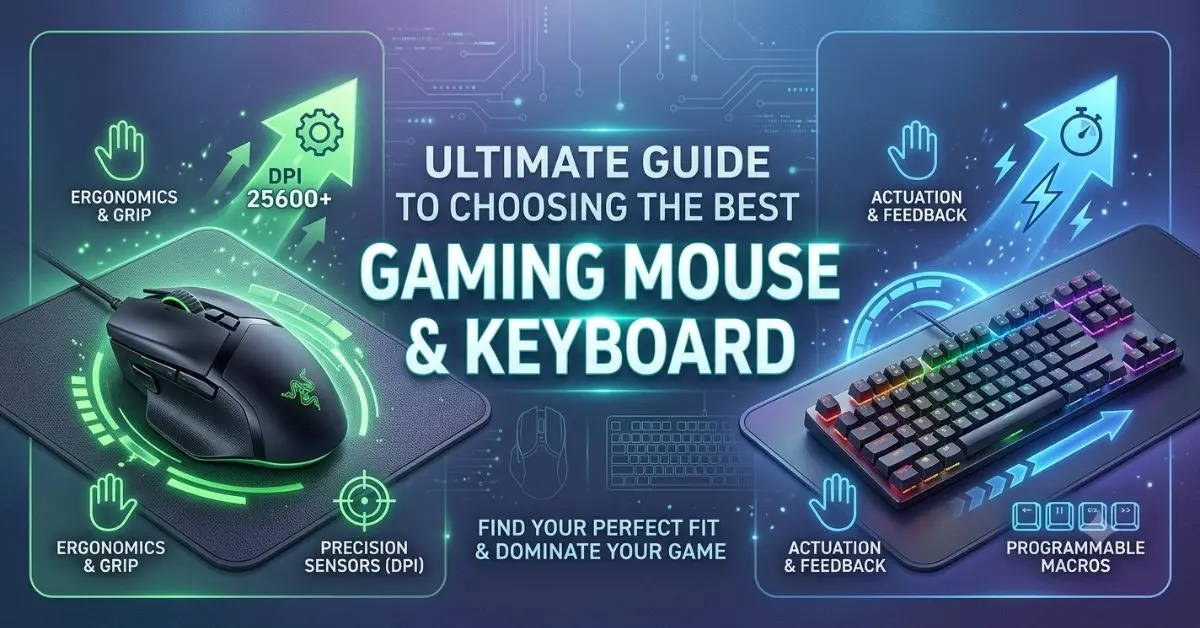
Whether you’re building your first gaming setup or upgrading your existing gear, choosing the right peripherals can make a huge difference in your gaming experience. This How to Choose the Best Gaming Mouse and Keyboard guide will help beginners and intermediate gamers understand what features matter most before making a purchase. While powerful PC hardware is important, your mouse and keyboard are the tools you interact with every second you play, making them just as essential.
The gaming market offers hundreds of options, ranging from budget-friendly models to premium devices packed with advanced features. With so many choices, it’s easy to become overwhelmed by terms like DPI, polling rate, mechanical switches, RGB lighting, anti-ghosting, and programmable buttons. Understanding these features will help you avoid spending money on products that don’t match your gaming style.
The good news is that you don’t always need the most expensive equipment to improve your gameplay. By focusing on comfort, durability, performance, and compatibility, you can find a gaming mouse and keyboard that fits both your needs and your budget.
In this complete How to Choose the Best Gaming Mouse and Keyboard guide, you’ll learn exactly what to look for, compare important features, and make an informed decision that enhances your gaming performance for years to come.
What is How to Choose the Best Gaming Mouse and Keyboard?
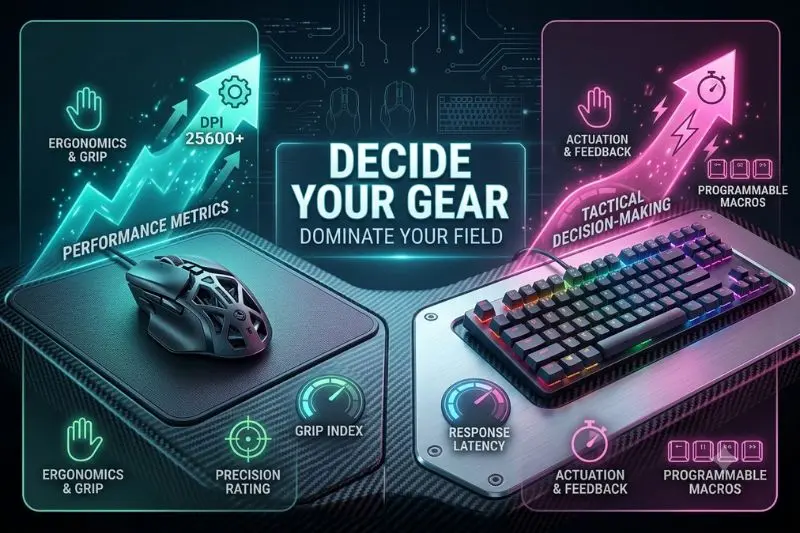
Choosing the best gaming mouse and keyboard means selecting peripherals that match your gaming preferences, hand size, budget, and the types of games you play. Unlike standard office accessories, gaming devices are specifically designed to provide faster response times, greater precision, customizable controls, and improved durability.
A quality gaming mouse typically includes:
- Adjustable DPI settings
- High-precision optical or laser sensor
- Programmable buttons
- Ergonomic design
- Lightweight construction
- Fast polling rate
Similarly, a gaming keyboard often features:
- Mechanical or optical switches
- Anti-ghosting
- N-key rollover
- Customizable RGB lighting
- Durable keycaps
- Programmable macros
Understanding these features helps you choose equipment that feels comfortable while giving you better control during gameplay.
Why is How to Choose the Best Gaming Mouse and Keyboard Important?
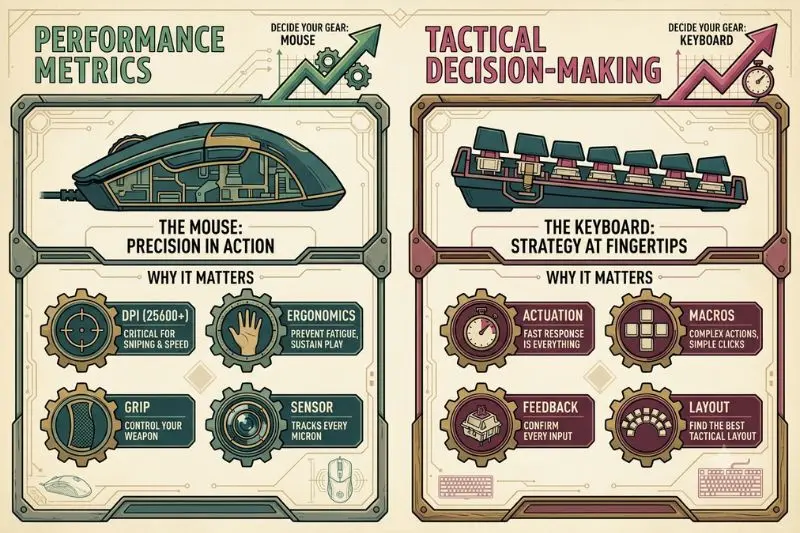
Your mouse and keyboard directly affect how accurately and comfortably you play.
Choosing the right equipment provides several advantages:
- Better aiming precision.
- Faster reaction times.
- Improved comfort during long gaming sessions.
- Reduced hand fatigue.
- Greater customization options.
- Increased durability.
- Better overall gaming experience.
Instead of buying based solely on appearance or price, understanding these factors helps you invest wisely.
Detailed Step-by-Step Guide
Step 1: Identify the Games You Play Most
Different genres benefit from different peripherals.
For example:
- FPS games require precise sensors and lightweight mice.
- MMO games often benefit from additional programmable buttons.
- Strategy games prioritize comfortable keyboards with responsive keys.
- Racing and sports games generally require balanced performance rather than specialized features.
Understanding your favorite genres helps narrow your options.
Step 2: Set a Realistic Budget
Gaming peripherals are available at nearly every price point.
Typical ranges include:
- Entry-level
- Mid-range
- Premium
A higher price doesn’t always guarantee better performance. Focus on value rather than marketing.
Step 3: Choose the Right Mouse Size
Comfort is one of the most important considerations.
Select a mouse that fits:
- Small hands
- Medium hands
- Large hands
An improperly sized mouse can cause discomfort during extended gaming sessions.
Step 4: Select the Best Grip Style
Most gamers use one of three grip styles.
Palm Grip
Your entire hand rests on the mouse.
Best for:
- Comfort
- Long gaming sessions
Claw Grip
Only part of your palm touches the mouse while your fingers arch upward.
Best for:
- Faster movements
- Competitive gaming
Fingertip Grip
Only your fingertips contact the mouse.
Best for:
- Maximum speed
- Quick aiming adjustments
Choose a mouse designed for your preferred grip.
Step 5: Understand DPI Settings
DPI (Dots Per Inch) measures how sensitive your mouse is.
Lower DPI offers:
- Better precision
- Improved aiming
Higher DPI offers:
- Faster cursor movement
- Easier navigation across large monitors
Most modern gaming mice allow you to adjust DPI instantly while gaming.
Step 6: Look at the Mouse Sensor
The sensor is the heart of any gaming mouse.
High-quality optical sensors provide:
- Better tracking
- Greater accuracy
- Reduced cursor skipping
- Consistent movement
For most gamers, a modern optical sensor is an excellent choice
Step 7: Decide Between Wired and Wireless
Both options have advantages.
Wired Mouse
- No battery charging
- Stable connection
- Lower price
Wireless Mouse
- Cleaner desk setup
- Greater freedom of movement
- Excellent battery life on modern models
Today’s wireless gaming mice perform nearly as well as wired models for most users.
Step 8: Choose the Right Keyboard Switches
Mechanical keyboards are available with different switch types.
Linear Switches
Smooth key presses with minimal resistance.
Ideal for:
- Fast-paced gaming
Tactile Switches
Provide noticeable feedback during each key press.
Ideal for:
- Mixed gaming and typing
Clicky Switches
Produce both tactile feedback and an audible click.
Ideal for:
- Typing enthusiasts
Selecting the right switch depends on your personal preference.
Step 9: Consider Keyboard Size
Gaming keyboards come in several layouts.
Full-Size
Includes:
- Number pad
- Function keys
- Navigation keys
Tenkeyless (TKL)
Removes the number pad while keeping essential gaming keys.
Compact (60% or 65%)
Saves desk space and provides more room for mouse movement.
Competitive FPS players often prefer smaller keyboards.
Step 10: Check Build Quality
A durable gaming keyboard and mouse will last much longer.
Look for:
- High-quality plastic or aluminum construction
- Durable switches
- Braided cables (for wired models)
- Premium keycaps
- Strong mouse buttons
- Reliable scroll wheel
Spending slightly more on build quality often results in better long-term value.
Step 11: Understand Polling Rate
The polling rate determines how often your mouse communicates with your computer. It is measured in Hertz (Hz).
Common polling rates include:
- 125 Hz
- 500 Hz
- 1000 Hz
A higher polling rate means your mouse sends information more frequently, resulting in smoother and more responsive cursor movement. For most gamers, a 1000 Hz polling rate provides excellent performance.
Step 12: Check the Number of Programmable Buttons
Many gaming mice include extra buttons that can be customized.
These buttons can be assigned to:
- Weapon switching
- Skill activation
- Push-to-talk
- Macros
- Shortcuts
MMO and MOBA players usually benefit from additional programmable buttons, while FPS players often prefer a simpler design.
Step 13: Evaluate Keyboard Features
Modern gaming keyboards offer several advanced features.
Look for:
- Anti-ghosting
- N-key rollover
- Dedicated media controls
- Volume wheel
- Detachable wrist rest
- USB passthrough
These features improve convenience and provide a better gaming experience.
Step 14: Consider RGB Lighting
RGB lighting is mainly a cosmetic feature, but it also has practical uses.
For example, you can:
- Highlight important gaming keys.
- Create custom lighting profiles.
- Match your gaming setup.
- Improve visibility in low-light environments.
If aesthetics matter to you, customizable RGB lighting is a nice bonus
Step 15: Review Software Support
Many gaming brands provide software for customizing peripherals.
Useful software features include:
- DPI adjustment
- RGB customization
- Macro recording
- Button remapping
- Profile saving
Choose products with user-friendly software that receives regular updates.
Step 16: Think About Ergonomics
Comfort becomes increasingly important during long gaming sessions.
Look for:
- Ergonomic mouse shape
- Comfortable key spacing
- Wrist support
- Lightweight construction
- Textured grip
Comfortable peripherals help reduce fatigue and improve consistency.
Step 17: Read User Reviews Before Buying
Customer reviews provide valuable insights that product descriptions often overlook.
Pay attention to comments about:
- Build quality
- Durability
- Comfort
- Software reliability
- Customer support
Reading both positive and negative reviews helps you make an informed decision.
Step 18: Compare Before Making Your Final Decision
Before purchasing, compare at least three products.
Consider:
- Price
- Features
- Warranty
- Brand reputation
- Performance
- Comfort
Taking a few extra minutes to compare options often leads to a better long-term investment.
Benefits of How to Choose the Best Gaming Mouse and Keyboard
Choosing the right gaming peripherals offers many advantages:
- Better aiming accuracy.
- Faster response times.
- Increased gaming comfort.
- Reduced hand and wrist fatigue.
- Improved durability.
- Better customization options.
- Enhanced gaming performance.
- Greater control during competitive matches.
- More enjoyable gaming sessions.
- Better value for your money.
Disadvantages / Risks
Although choosing quality gaming peripherals has many benefits, there are a few potential drawbacks:
- Premium models can be expensive.
- Mechanical keyboards may produce noticeable noise.
- RGB lighting may slightly increase power consumption.
- Some advanced features require additional software.
- Choosing the wrong size or shape may reduce comfort.
- Marketing claims can sometimes be misleading.
Carefully comparing products helps minimize these risks.
Common Mistakes to Avoid
Many gamers make avoidable mistakes when buying gaming peripherals.
Buying Only Based on Appearance
RGB lighting and flashy designs don’t always indicate better performance.
Ignoring Comfort
A mouse that feels uncomfortable after an hour of gaming isn’t a good investment.
Choosing Extremely High DPI
Very high DPI settings aren’t always beneficial and can make aiming less accurate.
Forgetting Compatibility
Always ensure the mouse and keyboard support your operating system and gaming setup.
Overlooking Software Quality
Good customization software improves usability and long-term satisfaction.
Ignoring Build Quality
Cheap materials often wear out faster, leading to additional replacement costs.
Buying Without Reading Reviews
User feedback often reveals real-world strengths and weaknesses that specifications don’t mention.
FAQs
What is the best DPI for gaming?
There is no universal setting. Many FPS players prefer between 400 and 1600 DPI for better precision, while other genres may benefit from higher sensitivity depending on personal preference.
Are mechanical keyboards better for gaming?
Yes. Mechanical keyboards generally provide faster response times, greater durability, and improved tactile feedback compared to traditional membrane keyboards.
Is a wireless gaming mouse good for competitive gaming?
Modern wireless gaming mice offer excellent performance with minimal input delay. Many professional players now use wireless models successfully.
How long does a gaming mouse usually last?
A high-quality gaming mouse can last several years with proper care. Lifespan depends on build quality, switch durability, and usage habits.
Do I need RGB lighting?
No. RGB lighting is optional. It improves aesthetics and customization but has little direct impact on gaming performance.
Should beginners buy expensive gaming peripherals?
Not necessarily. Many affordable gaming mice and keyboards provide excellent performance for beginners without requiring a large investment.
Can a gaming keyboard improve typing?
Yes. Many mechanical keyboards offer comfortable typing experiences in addition to gaming benefits, making them suitable for work and study as well.
What should I prioritize when buying a gaming mouse and keyboard?
Focus on comfort, build quality, sensor performance, switch type, durability, and compatibility rather than simply choosing the most expensive option.
Expert Tips & Bonus Points
To get the most from your gaming setup, keep these expert recommendations in mind:
- Test different grip styles before purchasing a mouse.
- Clean your mouse sensor and keyboard regularly.
- Replace worn mouse feet if movement becomes uneven.
- Use a quality mouse pad for improved tracking.
- Keep firmware and software updated.
- Save multiple profiles for different games.
- Avoid eating or drinking over your keyboard to extend its lifespan.
- Consider ergonomic accessories such as wrist rests for long gaming sessions.
- Don’t rush your purchase—comfort and reliability matter more than flashy features.
- Upgrade your peripherals only when they no longer meet your gaming needs.
Small improvements in comfort and precision can have a noticeable impact on both casual and competitive gaming.
Conclusion
Choosing the right gaming peripherals is one of the smartest investments you can make as a PC gamer. While powerful hardware determines how well your games run, your mouse and keyboard determine how effectively you interact with them. A comfortable mouse, responsive switches, accurate sensor, and durable construction can improve both your performance and overall enjoyment during every gaming session.
This How to Choose the Best Gaming Mouse and Keyboard guide has covered the essential features you should evaluate before making a purchase. By understanding factors such as DPI, polling rate, switch types, ergonomics, build quality, and programmable features, you can confidently select equipment that matches your gaming style and budget.
Remember that the “best” gaming mouse and keyboard aren’t necessarily the most expensive ones. The ideal choice is the one that feels comfortable, performs reliably, and suits the types of games you play most often. Take your time, compare different options, read user reviews, and focus on long-term value rather than marketing claims.
With the right combination of comfort, precision, and durability, your gaming peripherals will enhance your experience for years to come, helping you play more confidently whether you’re enjoying casual adventures or competing in intense online matches.
