Introduction
Gaming industry news is no longer just about new game announcements. The business behind video games is changing quickly, with major developments involving game releases, studio restructuring, artificial intelligence, subscriptions, digital ownership, mobile gaming, and industry jobs.
For players, developers, publishers, and gaming fans, understanding these changes helps explain why games are being released differently, why studios are changing their strategies, and where the industry may be heading next.
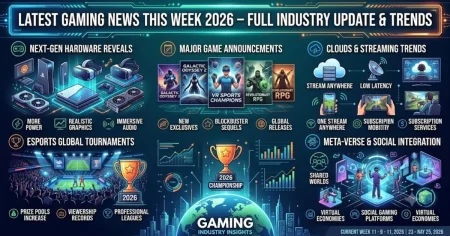
Gaming Industry News at a Glance
Here are some of the major areas currently shaping the industry:
- Major game releases: 2026 has a packed release calendar across PC, consoles, and other platforms.
- Studio restructuring: Layoffs and studio changes remain an important industry story, including major changes within Microsoft’s gaming division.
- AI in game development: Generative AI is moving from experimentation toward practical use in development and game production.
- Business model changes: Subscriptions, mobile monetization, digital distribution, and platform strategies continue to influence how games are created and sold.
- Gaming events: Gamescom and other major showcases continue to generate announcements for upcoming games and expansions.
- Digital ownership: The shift away from physical games is creating debate about what consumers actually own when they purchase digital titles.
What Is the Gaming Industry?
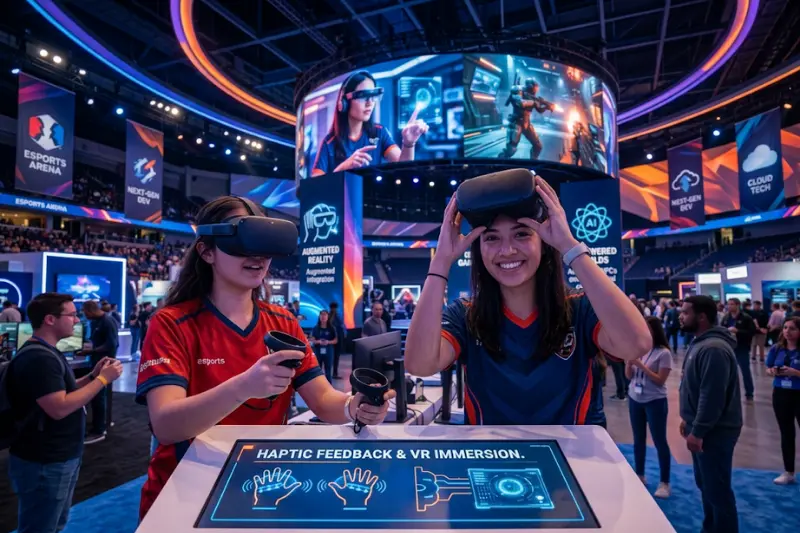
The gaming industry includes the companies, developers, publishers, platforms, stores, technology providers, and services involved in creating and distributing video games.
It covers much more than traditional console gaming. The modern industry includes:
- PC gaming
- Console gaming
- Mobile games
- Cloud and subscription services
- Virtual and augmented reality
- Esports
- Game development tools
- Game publishing
- Digital storefronts
- Gaming hardware
- Live-service games
This is why gaming industry news can cover everything from a new game trailer to a major corporate acquisition or a change in how developers use AI.
Why Gaming Industry News Matters

Following gaming industry news gives players a better understanding of why the games they play are changing.
For example, a studio closure can affect a game’s future development. A change in a subscription service can influence how players access games. New AI tools can change development workflows, while changes in digital distribution can affect how games are purchased and preserved.
The industry is also dealing with difficult economic questions. A 2026 industry analysis identified platform strategies, studio economics, publishing, financing, and the changing PC, console, and mobile markets as major structural issues.
That means today’s gaming news is often connected to larger questions about how games are made, funded, distributed, and monetized.
The Biggest Gaming Industry Trends to Watch
1. AI Is Becoming Part of the Game Development Conversation
Artificial intelligence has become one of the industry’s most discussed technologies.
The focus is increasingly moving beyond the question of whether AI exists in game development. Industry discussions are now examining how AI should actually be implemented, where it can help, and what challenges it creates for developers.
The 2026 GDC Trends Report highlights generative AI implementation as one of the major forces affecting the industry.
Potential uses include areas such as:
- Development assistance
- Content creation
- Testing and production workflows
- Live-game operations
- Prototyping
- Player-facing systems
However, AI does not automatically solve development problems. Studios still need human direction, creative judgment, technical oversight, and quality control.
2. Game Releases Remain a Major Driver of Industry Attention
One of the easiest ways to follow gaming industry news is to watch the release calendar.
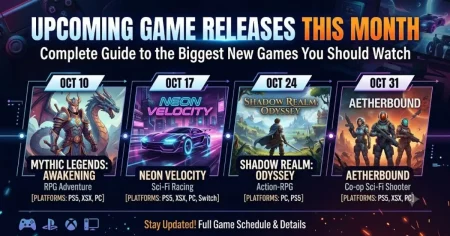
2026 has a large lineup of games across PC, PlayStation, Xbox, and Nintendo platforms. Current release coverage includes major franchises as well as new and independent projects.
September alone includes several notable releases, including The Blood of Dawnwalker, Marvel’s Wolverine, Fire Emblem: Fortune’s Weave, Silent Hill: Townfall, and Control Resonant according to current release coverage.
These releases matter beyond players simply having new games to play. Major launches can influence:
- Publisher revenue
- Hardware sales
- Subscription engagement
- Marketing strategies
- Developer hiring
- Competition between major franchises
3. Studio Layoffs and Restructuring Continue to Shape the Industry
Employment has become one of the most important and difficult topics in gaming industry news.
Microsoft’s gaming division announced a major restructuring in July 2026 that resulted in thousands of job cuts, with affected studios including parts of Bethesda and ZeniMax.
These events raise larger questions about the economics of AAA game development.
Modern games can require large teams and long development periods. When projects become more expensive or take longer to produce, publishers face pressure to control costs.
For players, the effects may not always be immediately visible. But restructuring can influence:
- Game development schedules
- Studio capacity
- Project cancellations
- Franchise priorities
- Employee experience
- Long-term creative continuity
This makes employment and studio health an important part of understanding the wider gaming industry.
The gaming industry is being shaped by more than individual game launches. Business models, platform strategies, subscriptions, cloud gaming, dCommon Mistakes When Following Gaming Industry News
Keeping up with gaming industry news can be useful, but not every headline deserves the same level of attention. Some mistakes can make it difficult to separate important developments from rumors or marketing.
1. Treating Rumors as Confirmed News
Gaming communities often share leaks, rumors, and unverified reports before companies make official announcements.
A rumor can be interesting, but it should not automatically be treated as fact.
Better approach: Look for confirmation from the developer, publisher, platform holder, or another reliable source before treating a major claim as confirmed.
2. Focusing Only on Game Announcements
New game reveals are exciting, but they represent only one part of the industry.
Important developments can also involve:
- Studio closures
- Development delays
- Business restructuring
- Platform changes
- Subscription policies
- Digital ownership
- Technology
- Employment
Looking beyond trailers and announcements gives you a more complete understanding of the gaming business.
3. Confusing Marketing With Independent Information
Publishers naturally present their products in the best possible way. A game trailer can show impressive features without explaining every limitation.
This does not mean official information is useless. It means readers should understand what type of information they are looking at.
For major decisions, compare official announcements with reliable reporting and hands-on information where available.
4. Ignoring the Difference Between a Delay and a Cancellation
A delayed game and a cancelled game are not the same thing.
A delay usually means development continues but the release date changes. A cancellation means the project is no longer expected to release in its current form.
Using the wrong term can create unnecessary confusion.
5. Reading Headlines Without Checking the Full Story
Gaming headlines are often designed to attract attention.
Before sharing a major story, check:
- Who made the announcement?
- When was it announced?
- What exactly changed?
- Is the information confirmed?
- Does the original report support the headline?
This simple process can prevent many misunderstandings.
Expert Tips for Following Gaming Industry News
Follow the Source, Not Just the Headline
When a story concerns a major change, try to identify the original announcement.
For example, if a publisher announces a studio restructuring, the company’s official communication may provide information that social media posts leave out.
Separate Confirmed Facts From Predictions
A useful habit is to mentally divide information into three categories:
Confirmed: The company or another reliable source has verified it.
Reported: A credible publication has reported it, but the information may not have been officially confirmed.
Speculation: People are predicting what might happen.
Keeping these categories separate makes gaming news much easier to understand.
Watch the Business Behind the Games
If you want to understand the industry rather than simply find out which games are coming next, pay attention to studios, publishers, platforms, technology, and business models.
These areas often explain why certain games are delayed, cancelled, moved to different platforms, or changed during development.igital ownership, and changing player behavior are becoming equally important.
4. Gaming Is Moving Toward a More Connected Ecosystem
The traditional idea that players belong to one platform is becoming less important.
Players increasingly move between PC, consoles, mobile devices, and cloud services. Industry research points to platform convergence as one of the major forces that could reshape gaming over the coming years.
This shift can benefit players because games may become available across more devices. It can also create new challenges for developers, who may need to support multiple platforms while maintaining consistent performance and features.
Cross-platform progression, cloud saves, digital accounts, and cross-play are examples of how gaming is becoming more connected.
5. Subscriptions Are Changing How Players Access Games
Instead of buying every game individually, many players now use gaming subscriptions to access large libraries.
Subscriptions can offer value to players who want to try different games without purchasing each title separately. They can also give publishers and platforms another way to generate recurring revenue.
Current industry research identifies subscription-based content as an important part of the gaming market’s ongoing growth.
However, subscriptions also create an important difference between access and ownership.
A game purchased outright may remain available in a player’s library under the relevant platform’s terms. A subscription game can disappear when licensing agreements change or when a title leaves the service.
For players, the practical question is therefore not simply:
“Is the subscription cheaper?”
It is also:
“Do I want temporary access to many games or permanent access to specific games I care about?”
6. Digital Ownership Is Becoming a Bigger Consumer Issue
The shift from physical discs and cartridges toward digital distribution is another major topic in gaming industry news.
Digital games are convenient. Players can download them without visiting a store, and publishers can distribute updates and expansions more easily.
But digital distribution also raises questions about ownership, licensing, preservation, resale, and long-term access.
Recent controversy surrounding the future of physical PlayStation games shows that some players still place significant value on physical ownership.
Microsoft has also recently announced a system allowing Xbox Insiders to associate supported physical disc purchases with digital access, illustrating that the industry is experimenting with different approaches to physical and digital game access.
For consumers, this makes it increasingly important to understand what a purchase actually provides.
7. Mobile Gaming Remains a Major Part of the Market
Gaming is no longer primarily a console or PC activity.
Mobile devices have made gaming accessible to a much larger audience, while games such as Fortnite, Roblox, and Minecraft demonstrate how gaming can extend beyond traditional platforms.
BCG identifies mobile gaming as a major part of global gaming revenue and expects platform boundaries to continue becoming less distinct.
Mobile gaming also uses different monetization approaches, including:
- Free-to-play models
- In-app purchases
- Battle passes
- Advertising
- Subscriptions
- Cosmetic items
These models have influenced expectations across the wider gaming industry.
8. Cloud Gaming Could Reduce Hardware Barriers
Cloud gaming allows supported games to run remotely and stream gameplay to a compatible device.
The basic idea is simple:
Instead of requiring a powerful gaming computer or console to perform all the processing locally, some of the workload is handled by remote servers.
This could make high-end gaming more accessible to people who do not want to purchase expensive hardware.
BCG’s 2026 gaming report identifies cloud gaming as one of the technologies contributing to a more platform-agnostic future.
But cloud gaming still depends heavily on factors such as:
- Internet quality
- Latency
- Server availability
- Supported games
- Service pricing
- Regional availability
So cloud gaming is not a universal replacement for local hardware. It is better understood as another way to access games.
9. Game Development Costs Are Under Pressure
One of the biggest challenges facing the industry is the economics of making large games.
AAA games can require large teams and lengthy development cycles. When production becomes more expensive, publishers need successful launches to justify the investment.
This creates pressure around:
- Development budgets
- Release schedules
- Marketing costs
- Monetization
- Game pricing
- Studio staffing
- Franchise management
Recent layoffs across the industry show how serious these pressures can become. Xbox, for example, announced a restructuring involving 3,200 job cuts through fiscal year 2027, with 1,600 roles eliminated immediately in July.
The issue is bigger than one company. Industry analysts have described 2026 as a difficult period for studios dealing with changing economics and restructuring.
10. What These Changes Mean for Players
For gamers, these industry trends can have both positive and negative effects.
Potential benefits include:
- More games available across platforms
- Easier access through subscriptions
- Better cross-platform features
- More cloud-based options
- Faster development workflows from useful AI tools
- Greater variety from independent developers
Potential concerns include:
- More digital-only releases
- Reduced physical ownership
- Subscription dependency
- Studio closures and layoffs
- Higher development pressure
- AI-related concerns about creative work
- Increasing complexity in game monetization
The result is an industry that offers more ways to play than ever before, while also creating new questions about cost, ownership, employment, and creative quality.
11. Why AI Could Change Game Development
AI deserves special attention because its impact goes beyond one particular game or platform.
Developers are exploring AI for different parts of production, while the industry continues debating its creative, economic, and ethical consequences.
A major challenge is finding the right balance.
AI may help teams automate repetitive work or speed up certain processes, but players and developers continue to debate how much AI-generated material should appear in finished games. Current reporting shows that attitudes among developers remain mixed, with concerns about creative quality and employment alongside interest in productivity benefits.
The most useful question is therefore not simply “Will AI replace game developers?”
A better question is:
“Which parts of game development can AI assist without reducing the human creativity and quality players expect?”
That distinction will likely remain important as the technology develops.
Common Mistakes When Following Gaming Industry News
Keeping up with gaming industry news can be useful, but not every headline deserves the same level of attention. Some mistakes can make it difficult to separate important developments from rumors or marketing.
1. Treating Rumors as Confirmed News
Gaming communities often share leaks, rumors, and unverified reports before companies make official announcements.
A rumor can be interesting, but it should not automatically be treated as fact.
Better approach: Look for confirmation from the developer, publisher, platform holder, or another reliable source before treating a major claim as confirmed.
2. Focusing Only on Game Announcements
New game reveals are exciting, but they represent only one part of the industry.
Important developments can also involve:
- Studio closures
- Development delays
- Business restructuring
- Platform changes
- Subscription policies
- Digital ownership
- Technology
- Employment
Looking beyond trailers and announcements gives you a more complete understanding of the gaming business.
3. Confusing Marketing With Independent Information
Publishers naturally present their products in the best possible way. A game trailer can show impressive features without explaining every limitation.
This does not mean official information is useless. It means readers should understand what type of information they are looking at.
For major decisions, compare official announcements with reliable reporting and hands-on information where available.
4. Ignoring the Difference Between a Delay and a Cancellation
A delayed game and a cancelled game are not the same thing.
A delay usually means development continues but the release date changes. A cancellation means the project is no longer expected to release in its current form.
Using the wrong term can create unnecessary confusion.
5. Reading Headlines Without Checking the Full Story
Gaming headlines are often designed to attract attention.
Before sharing a major story, check:
- Who made the announcement?
- When was it announced?
- What exactly changed?
- Is the information confirmed?
- Does the original report support the headline?
This simple process can prevent many misunderstandings.
Expert Tips for Following Gaming Industry News
Follow the Source, Not Just the Headline
When a story concerns a major change, try to identify the original announcement.
For example, if a publisher announces a studio restructuring, the company’s official communication may provide information that social media posts leave out.
Separate Confirmed Facts From Predictions
A useful habit is to mentally divide information into three categories:
Confirmed: The company or another reliable source has verified it.
Reported: A credible publication has reported it, but the information may not have been officially confirmed.
Speculation: People are predicting what might happen.
Keeping these categories separate makes gaming news much easier to understand.
Watch the Business Behind the Games
If you want to understand the industry rather than simply find out which games are coming next, pay attention to studios, publishers, platforms, technology, and business models.
These areas often explain why certain games are delayed, cancelled, moved to different platforms, or changed during development.
What is gaming industry news?
Gaming industry news covers important developments involving video games, including game announcements, releases, studio changes, technology, publishers, platforms, business strategies, and industry employment.
Why are gaming studios laying off employees?
Studio layoffs can happen for different reasons, including project cancellations, restructuring, changing business priorities, cost pressures, and the completion of major projects. The specific reason depends on the company and situation.
How does AI affect the gaming industry?
AI is being explored for areas of game development and production. It may assist with certain repetitive or technical tasks, but its use also raises questions about creative work, quality, employment, and appropriate implementation.
Is digital gaming replacing physical games?
Digital distribution has become increasingly important, but physical games have not disappeared completely. The balance differs by platform, market, and consumer preference.
Is cloud gaming the future of gaming?
Cloud gaming is an important part of the industry’s development, but it is not guaranteed to replace traditional PC and console gaming. Internet quality, latency, availability, pricing, and supported games remain important factors.
Where can I find reliable gaming industry news?
Look for official announcements from game developers, publishers, and platform companies, along with established gaming publications and other reliable reporting. For important claims, compare multiple sources rather than relying on a single social media post.
Conclusion
Gaming industry news is about much more than the next big game trailer. The industry is changing through AI, cross-platform gaming, subscriptions, digital distribution, cloud technology, mobile gaming, and major changes within development studios.
For players, the best way to follow these developments is to look beyond headlines. Check whether information is confirmed, understand the source, and consider how a development affects the games, platforms, and services you actually use.
The gaming industry will continue to evolve, but one thing remains clear: understanding the business and technology behind games makes the news far more meaningful.